
S&C courses for sports coaches: GAA, rugby and team sport
What GAA, rugby and team-sport coaches in Ireland need to develop stronger, faster players and plan training around the season, and which course pathway fits.
Strength and conditioning arrived in Irish club sport faster than the coaching education did. Plenty of capable GAA, rugby, soccer and hockey coaches now run gym sessions, prescribe running work and manage loads across a season, having learned most of it from watching other people do it. This is about closing the gap between that and a structured approach.
What team-sport coaching asks of an S&C qualification
Most S&C content is written for one coach and one athlete. That is not the job in team sport. You are working with a squad of twenty or thirty players who differ in training age, position, injury history and how seriously they take the off-season, in a facility you might share, for an hour you might not control.
So the skills that matter most are:
- Profiling a squad quickly, so you know who needs what without testing every player on everything.
- Programming in tiers, so one session can work for players at different levels.
- Planning around fixtures, rather than around an idealised training block.
- Knowing what to drop when the week goes wrong, which it will.
The GAA context: club and county
The GAA presents a genuinely difficult planning problem. Players are amateur, often play two codes, frequently belong to both club and county panels, and the fixture calendar can change at short notice. Add school or college teams for younger players and the total training load can be well beyond what any single coach sees.
Two things follow:
- Monitoring matters more than programming sophistication. Knowing what a player has actually done this week beats a perfect plan built on assumptions.
- Communication is part of the job. Talking with the team management and with other coaches in a player’s life is not an optional extra.
Rugby and other field sports
Rugby brings contact load and larger positional differences: the physical demands on a prop and a winger diverge far more than in most sports, and programming has to account for it. Soccer and hockey shift the emphasis towards repeated high-speed running and change of direction.
What is common across field sports is the mix: acceleration and top-end speed, the ability to decelerate and change direction, strength and power that transfers to the pitch, and energy systems developed to match the actual demands of the game rather than a generic fitness standard.
Planning across a long season
Periodisation models that survive a fixture list
Most coaches meet linear periodisation first, and it works well for a clean pre-season block. It holds up less well once matches are weekly. That is where other models earn their place: approaches that let you develop more than one quality at a time, and that can absorb a disrupted week without the whole plan collapsing.
EPI’s Phase 1 course covers linear periodisation and programme design fundamentals; the Phase 2 course adds conjugate periodisation, advanced programme design and an athlete case study that pulls the two phases together.
Energy system development for field sports
“Fitness work” in club sport is often whatever running the coach did as a player. A structured approach separates the systems and trains them deliberately:
- Short, repeated maximal efforts with adequate recovery.
- Sustained high-intensity work with incomplete recovery.
- Aerobic development to support recovery between efforts and across a season.
EPI’s syllabus covers these across both phases: ATP-CP work in Phase 1, and anaerobic and aerobic development including MAS-based training in Phase 2, much of it delivered through conditioning games, which is usually how it will be run at a club.
Testing and profiling a squad
Testing is where most club programmes either start well or go wrong. A standardised battery, run consistently, tells you who needs what and gives you a baseline to judge whether anything you did worked. Run inconsistently, or on tests nobody acts on, it is an hour of everyone’s time wasted.
The practical questions are which tests are worth the time, how to adapt them to the players in front of you, and what to do with the results once you have them, which is the part most often skipped.
Working alongside team management
The technical side of S&C is rarely what causes problems at club level. The friction comes from competing priorities: you want a lighter week before a match, the manager wants a hard session; you want a player to sit out a session, the player wants to be seen training.
Coaches who last in these roles tend to do three things:
- They agree the plan with management before the season rather than negotiating it weekly.
- They explain the reasoning in terms of performance on Sunday rather than in physiological language.
- They accept that their plan is one input among several (the team’s tactical preparation, the player’s own judgement, medical advice) rather than the one that automatically wins.
Which pathway suits a sports coach
| If you coach… | Start with | Because |
|---|---|---|
| An adult club squad, new to structured S&C | Phase 1 | Screening, testing, speed mechanics, Olympic lifting and programme design fundamentals: three days, and usable straight away |
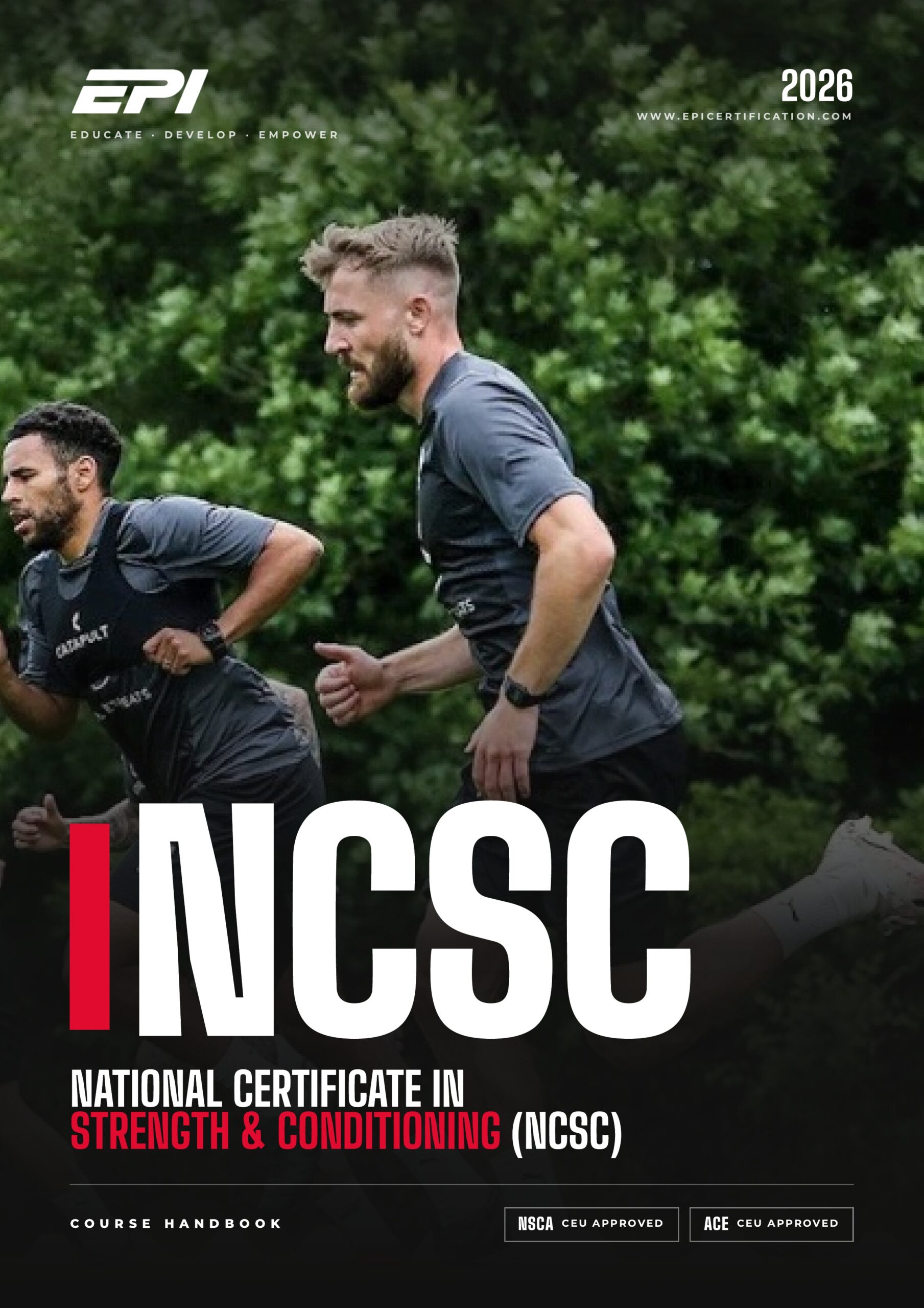
| An adult squad, already programming | The full NCSC | Adds advanced programming, conjugate periodisation, agility and energy system development across a season |
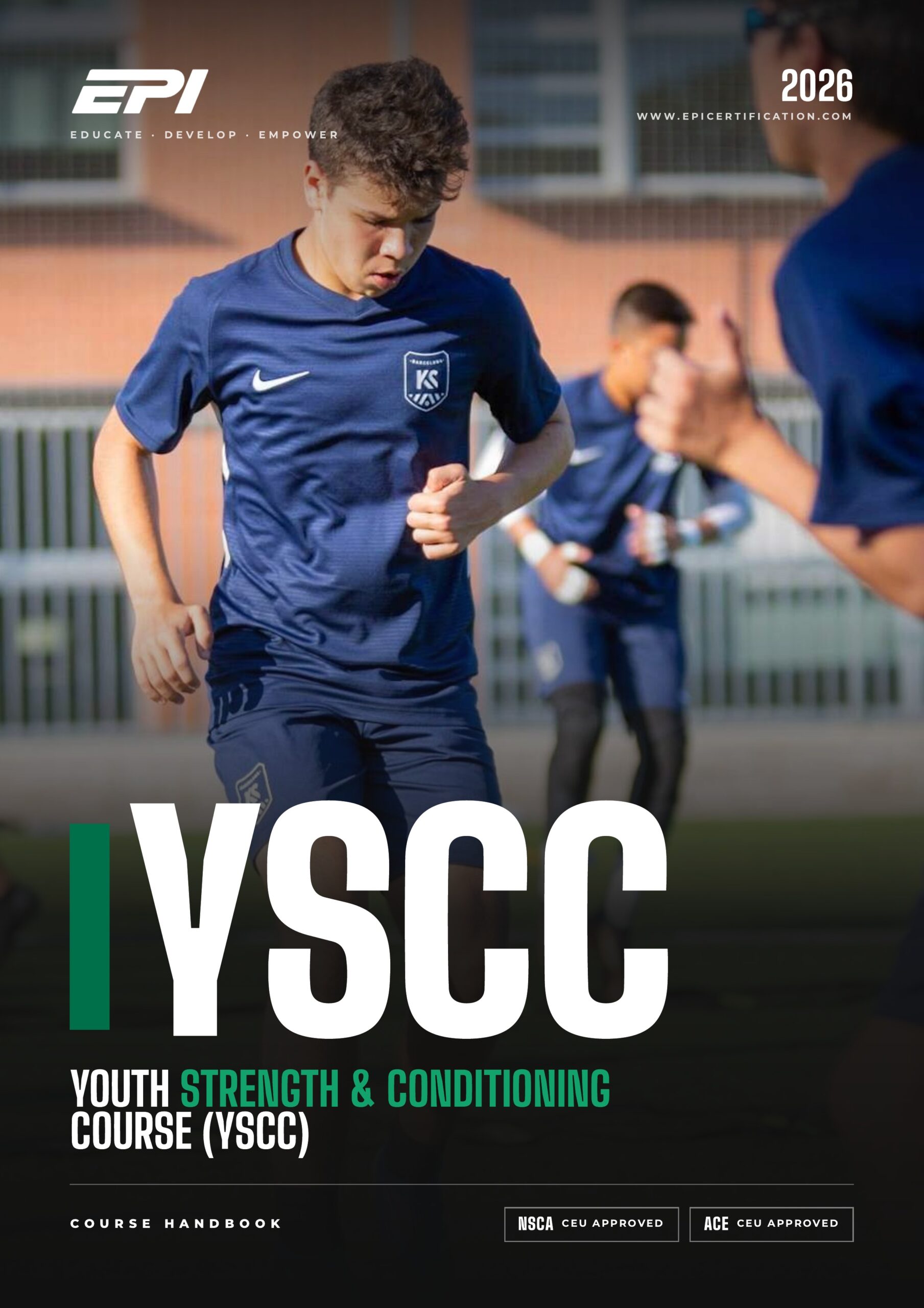
| Underage or development squads | The Youth S&C Course | Built around long-term athlete development for 6–17 year olds rather than adult programming |
If you are unsure which level you need, our guide to how S&C qualifications are recognised explains what each type of course does and does not give you.
Underage squads need a different qualification
This is worth stating plainly, because it is where well-meaning club coaches most often go wrong. Young athletes are not scaled-down adults. They are maturing at different rates, often playing several sports, and the priority is movement competency and long-term development rather than maximum strength.
Frequently asked questions
Do GAA coaches need a strength and conditioning qualification?
There is no universal rule requiring one. Clubs, county boards and insurers set their own expectations, and many club roles are filled by volunteers without a formal S&C qualification. What is not optional is insurance: if you are prescribing training, check that you are covered for the work you are doing.
Is strength and conditioning for team sports different from working with individual athletes?
The principles are the same; the constraints are not. With a squad you are managing twenty or thirty players at different levels of training age, around a fixture list you do not control, often with limited facilities and time. Programming for team sport is as much about prioritising and adapting as it is about session design.
Which EPI course is best for a club coach?
For most club coaches working with adult squads, Phase 1 is the sensible entry point and the full NCSC is the complete pathway. If you work with underage teams, the Youth S&C Course is the more relevant qualification because it is built around long-term athlete development rather than adult programming.
Check the Dublin dates, or ask EPI whether your existing qualification counts towards Phase 2 entry.