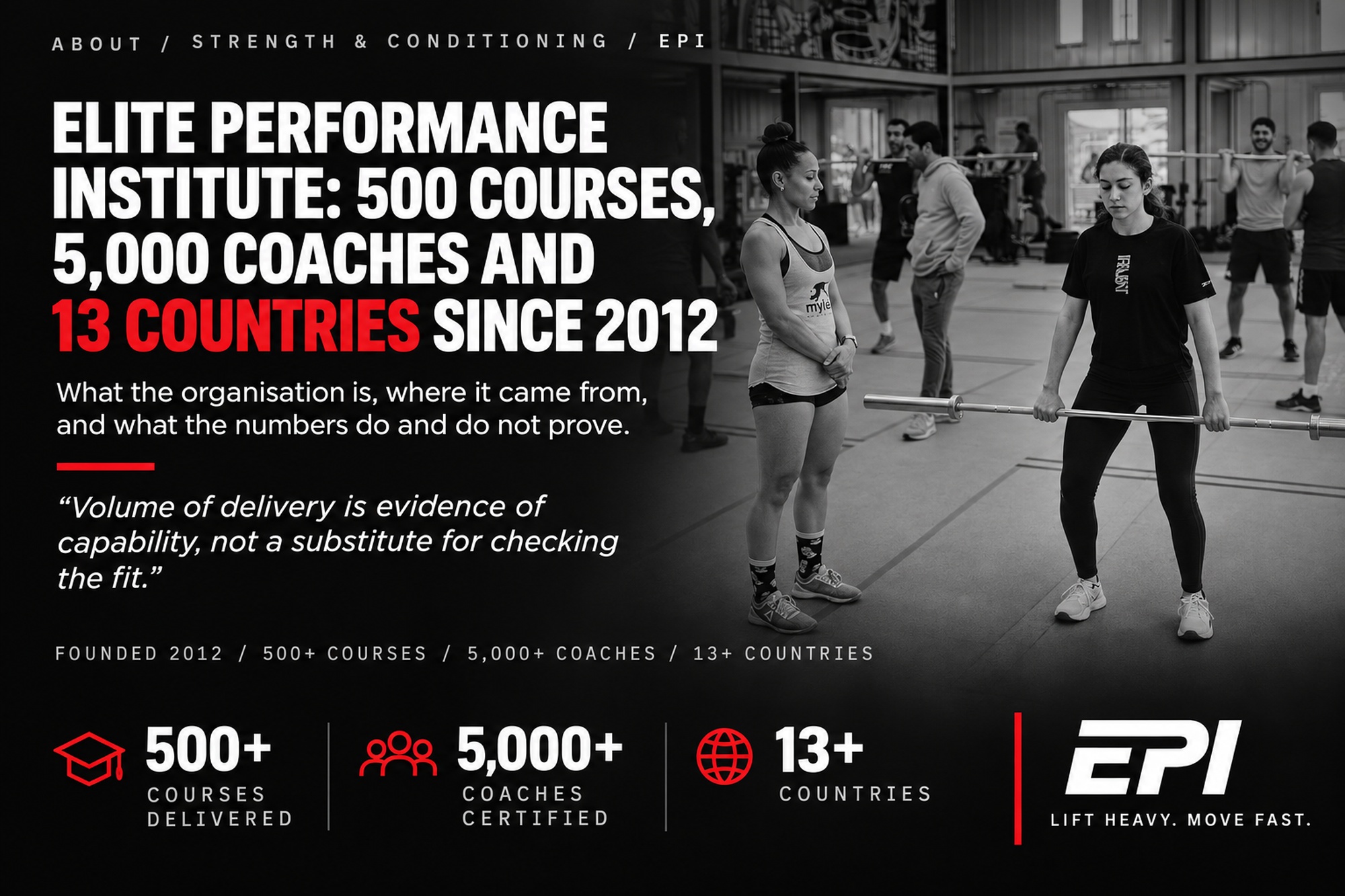
The numbers, and what they do and do not mean
As published by EPI:
- 500+ courses delivered
- 5,000+ coaches certified
- 13+ countries
- Operating since 2012
- 4.9 stars from 221 Google reviews
It is worth being precise about what figures like these establish, because education marketing routinely implies more than the numbers support.
They establish durability and volume. An organisation that has run for over a decade and delivered five hundred courses has solved the unglamorous problems — scheduling, assessment consistency, tutor supply, running the same standard in Dublin and in Mérida. A great many education ventures do not survive long enough to face those problems.
They do not establish that EPI is the right certification for any particular person. That depends on what you coach, where you intend to work, and which credential the employers in your market ask for. A coach targeting American collegiate sport should be looking hard at the NSCA’s CSCS. A coach targeting UK accredited roles should be looking at the UKSCA’s ASCC. Volume of delivery is evidence of capability, not a substitute for checking the fit.
What the NCSC actually is
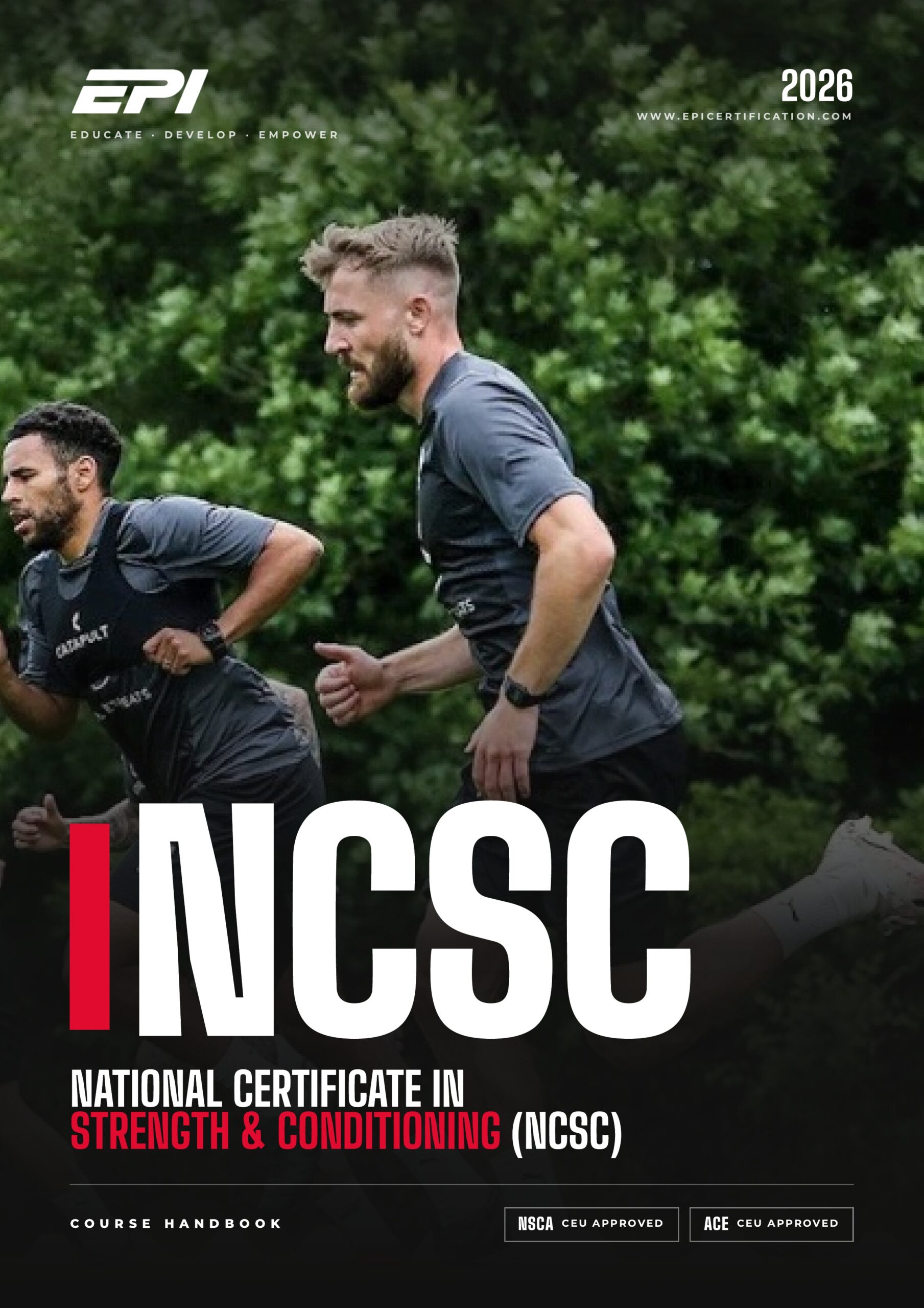
The National Certificate in Strength & Conditioning is EPI’s main in-person qualification. It runs over six days and is structured in two phases, Phase 1 and Phase 2, which can be taken as a route rather than all at once.
The emphasis is practical. Delegates coach, are observed coaching, and are assessed on coaching rather than only on written work — which is the part most people underestimate when comparing certifications on price and duration alone.
There is also a set of on-demand courses for coaches who cannot reach a venue, or who want specific content without committing to the full in-person programme.
Who actually takes it
The room is more mixed than people expect.
Sport coaches — GAA, soccer and other field sports — take it to programme strength, speed and conditioning for squads at club and county level. This is a large share of the Irish intake and shapes how the content is taught: the material has to work for a coach with a squad, limited equipment and two sessions a week, not only for a full-time practitioner with a performance centre.
Personal trainers take it to move from general population work into athletic development, which is a genuine change of job rather than an add-on.
Physiotherapists and sports therapists take it to work more confidently in the space between discharge from rehabilitation and return to performance.
Coaches already working in performance take it for structure — for a periodisation model they can defend, rather than an accumulated set of habits.
Where the courses run
In Ireland and Northern Ireland the main venues are Dublin and Belfast, with courses scheduled through the year.
Internationally, EPI has delivered across Europe, the Middle East, Asia and the Americas, with recent and scheduled programmes in cities including Warsaw, Kraków, Łódź, Wrocław, Prague, Brno, Bucharest, Istanbul and Mérida.
The international spread is the part most relevant to a coach assessing the organisation. Running a practical, assessed course in one venue is a logistical exercise. Running the same assessed standard in thirteen countries is an organisational one.
How to check any of this
A reasonable scepticism toward education marketing is healthy, including toward this article. Three things are worth doing before committing to any provider, EPI included:
1. Read the reviews, not the rating. A 4.9 average across 221 reviews is a useful signal, but the content of recent reviews tells you more than the number.
2. Ask what the assessment involves. Practical assessment is expensive to run and is the first thing a provider cuts. Ask directly whether you will be observed coaching.
3. Ask the employers you are targeting. The only recognition that matters is recognition in the market you want to work in. Ask two or three people doing the job you want which credential they were asked for.
EPI delivers the National Certificate in Strength and Conditioning in Dublin and Belfast, beginning with the Phase 1 strength and conditioning course.
Frequently asked questions
What is Elite Performance Institute?
Elite Performance Institute (EPI) is a strength and conditioning education provider founded in Ireland in 2012. It delivers the National Certificate in Strength & Conditioning (NCSC) in person and a range of on-demand courses, and has certified more than 5,000 coaches across 13+ countries.
Who founded EPI?
Karl Gilligan, MSc, CSCS. He has coached athletes in professional sport for over twenty years, including at Rugby World Cup and Olympic Games level, and is EPI’s Founder and CEO.
How many coaches has EPI certified?
More than 5,000 since 2012, across over 500 delivered courses in 13+ countries.
Where does EPI run its courses?
Primarily Dublin and Belfast in Ireland and Northern Ireland, and internationally across Europe, the Middle East, Asia and the Americas.
What is the NCSC?
The National Certificate in Strength & Conditioning, EPI’s main in-person qualification. It runs over six days, is structured as Phase 1 and Phase 2, and is assessed practically as well as theoretically.
Is EPI a governing body for strength and conditioning?
No. EPI is an education and certification provider. Strength and conditioning has no single licensing authority or legally protected title in Ireland or the UK.
Written by Karl Gilligan, MSc, CSCS, founder of Elite Performance Institute (EPI). Karl has coached at Rugby World Cup and Olympic Games level and has worked in strength and conditioning for over twenty years.