
Quick answer: If you already coach, the questions worth asking about a Dublin S&C course are different from a beginner’s. Who is actually teaching it, how deep the programming content goes, how much supervised barbell coaching you get, and whether the course is still useful to you a year later. This guide gives you a checklist and the 2027 Dublin dates.
Experienced strength coaches tend to get less out of course marketing than anyone else, because they already know the vocabulary. Every provider lists speed, strength, power and periodisation. The differences are in the detail underneath those words.
What experienced coaches should expect from a Dublin course
If you have been coaching for a few years, you are not paying to be told what a squat is. You are paying for three things: a system for making programming decisions, supervised correction of your own coaching, and content current enough to be worth your weekend.
The most useful courses give you something to test against your own athletes on Monday. Look for a worked case study or a planning exercise that takes the content and applies it to a real season, rather than a set of disconnected topics you are left to integrate yourself.
That last point matters more than it used to. Testing and monitoring technology – timing gates, velocity-based training devices, GPS – has moved from elite settings into club and private practice, and a course that ignores it is teaching an older version of the job.
A checklist for evaluating S&C courses in Dublin
Tutor credentials and coaching background
Ask who is delivering the course, not who owns the company. What do they coach, at what level, and what credentials do they personally hold? A tutor who is actively coaching brings problems and solutions from real programmes, which is the part you cannot get from a textbook.
Depth of the programming content
Entry-level courses usually stop at linear periodisation. If you are already programming seasons, look for more: conjugate models, complex and contrast methods, how to structure anaerobic and aerobic energy system work around a competitive schedule, and a worked case study that pulls it together.
How much supervised lifting instruction is included
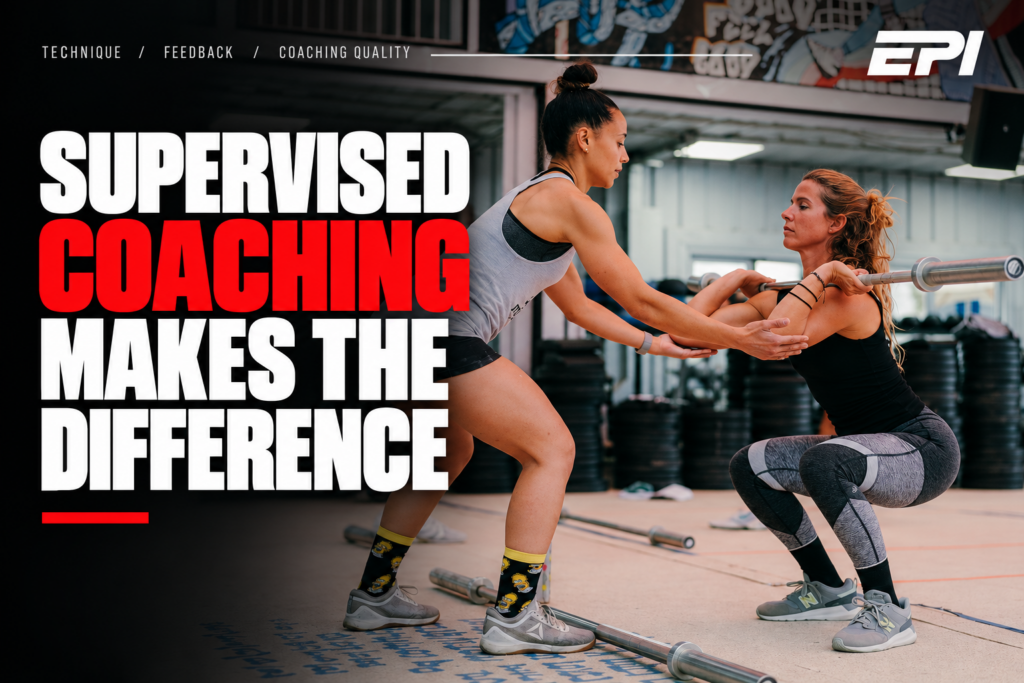
There is a real difference between watching a lift demonstrated and being coached while you coach it. Ask specifically whether the Olympic lifts are taught as a coaching model – how to teach and correct them – rather than simply performed.
Group size and how much coaching you actually get
Contact hours only mean something in the context of group size. Twenty hours in a group of twelve is a different course from twenty hours in a group of forty. Ask how many participants are on a typical course and how many tutors are on the floor during practical sessions – that ratio determines how much individual correction you will receive.
Recognition and continuing-education value
If you already hold a credential with a body such as the NSCA or ACE, check whether the course carries continuing-education approval so the days count towards maintaining it. If you need a framework level instead, that is a different kind of course – see how S&C qualifications are recognised.
What you keep afterwards
Programme templates, screening resources and continued access to course content are worth real money after the weekend ends. Ask what remains available to you once the course finishes.
Entry-level or advanced: which do you need?
EPI splits its certificate into two three-day phases, which makes the decision fairly clean:
Course | Covers | Suits |
|---|---|---|
Movement screening and fitness testing, acceleration speed, Clean & Jerk coaching model, programme design fundamentals, slow SSC plyometrics, ATP-CP energy system work, linear periodisation | Coaches formalising a self-taught skill set, or moving into athletic work | |
Advanced programme design, strength and power development, max velocity speed, agility, anaerobic and aerobic energy system development, conjugate periodisation, Snatch coaching model, athlete case study | Coaches already programming for athletes who want more advanced methods |
Phase 2 requires Phase 1 or an equivalent qualification. If you already hold an S&C qualification and think it should count, contact EPI with your credentials before booking – equivalence is assessed case by case.
Three mistakes experienced coaches make when choosing a course
Buying on syllabus rather than delivery
Two courses can list identical module titles and be completely different experiences. “Olympic weightlifting” might mean a two-hour lecture or a full day of coaching under supervision. Always ask how long is spent on a topic and how it is taught, not just whether it appears.
Assuming advanced means better
If you have been coaching from self-taught knowledge, an entry-level course often exposes more gaps than an advanced one – particularly in screening, testing and the fundamentals of programme design. There is no prize for starting higher up.
Ignoring what happens after the weekend
The value of a course is partly in what you take away: templates, screening protocols, ongoing access to materials and people you can ask questions of afterwards. A course with no follow-up support is worth less than an identical one that keeps the door open.
Upcoming Dublin intakes for 2027
Course | Dates | Format |
|---|---|---|
29 January – 25 April 2027 | Both phases, six days | |
Phase 1, Dublin | 29–31 January 2027 | Three days, Friday to Sunday |
Youth S&C Course, Dublin | 12–14 February 2027 | Three days, Friday to Sunday |
Phase 2, Dublin | 23–25 April 2027 | Three days, Friday to Sunday |
All current dates and locations, including Belfast, are on the upcoming course dates page.
Practical points if you are travelling to Dublin
EPI course days start at 08:30 and run to around 16:30, Friday to Sunday. If you are coming from outside the city, that Friday start usually means travelling the night before, so factor two or three nights’ accommodation into the real cost of the weekend.
It is also worth planning your own training around it. Three consecutive days of practical sessions – lifting, sprinting, plyometrics – is a meaningful physical load on top of your normal week, and coaches routinely underestimate it. Turning up fresh gets you more from the practical work.
Confirm the venue details and what to bring with EPI when you book.
Frequently asked questions
Is there an advanced S&C course in Dublin for experienced coaches?
Yes. EPI’s Phase 2 Strength & Conditioning Course covers advanced programme design, strength and power development, max velocity speed, agility, anaerobic and aerobic energy system development, conjugate periodisation and the Snatch, finishing with an athlete case study. The next Dublin date is 23–25 April 2027.
Can I skip Phase 1 if I already have a strength and conditioning background?
EPI requires Phase 1 or an equivalent qualification to register for Phase 2. Whether your existing qualification counts as equivalent is assessed by EPI, so contact the team with your credentials before booking.
When is the next strength and conditioning course in Dublin?
The next full NCSC intake in Dublin runs from 29 January to 25 April 2027, starting with Phase 1 on 29–31 January and completing with Phase 2 on 23–25 April. The Youth S&C Course runs in Dublin on 12–14 February 2027.
Planning your 2027 CPD? View the Dublin 2027 course dates or contact EPI to check whether your existing qualification counts towards Phase 2 entry. |